Key takeaways
- Five camping first aid kits compared, from a compact 110-piece kit to a 238-piece premium set, with contents, cases, weight, and waterproofing guidance.
- Top Pick: Coleman All Purpose Basic First Aid Kit
- Runner-up: Be Smart Get Prepared 110 pc First Aid Kit
- Also consider: Surviveware Large First Aid Kit
The best camping first aid kit is the one that matches your trip: a compact 110-piece kit covers a weekend car-camping trip for two, while a 238-piece set with a bonus mini kit suits a family base camp, and a light 78-piece hiker kit fits a backpack where every ounce matters. There is no single kit that wins for every camper, because piece count alone says little about whether the contents are useful, the case survives rain and rough handling, and the kit is light enough to carry.
This guide compares five real kits you can buy on Amazon, from a budget soft-sided 205-piece set to a premium 182-supply trauma-style kit built for the backcountry. For each kit, the guide looks at what is actually inside, how the case holds up outdoors, how much it weighs, and who it fits best, so you can pick by trip length, group size, and pack weight instead of by the biggest number on the box.
As an Amazon Associate, we earn from qualifying purchases.
Table of Contents
- Coleman All Purpose Basic First Aid Kit
- Be Smart Get Prepared 110 pc First Aid Kit
- Surviveware Large First Aid Kit
- Adventure Medical Kits Mountain Series Hiker
- ViTAC Advanced Adventurer aFAK
- How to Choose a Camping First Aid Kit
- Frequently Asked Questions
- Conclusion
Coleman All Purpose Basic First Aid Kit
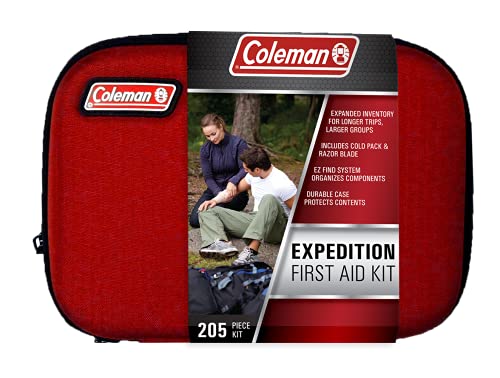
The Coleman All Purpose Basic First Aid Kit is the straightforward budget pick in this guide, and it earns that place by doing the simple things well. It holds 205 first aid items in a light, soft-sided case, which makes it easy to toss into a car trunk, a camp box, or a duffel without adding the bulk of a hard case. Coleman is a camping brand first, and this kit reads like one: it is built for minor emergencies at a campsite, with the basics for cuts, scrapes, and small burns, rather than a medical bag meant for a clinic shelf.
The contents follow the classic all-purpose pattern, with bandages, gauze, antiseptic supplies, and the small tools that make wound care practical in the field, such as scissors and tweezers. Because the case is soft-sided, the kit packs flat against other gear and slips into the gaps of a loaded vehicle, which matters when a car is full of tents, chairs, and coolers.
Weight and size are where this kit makes its case for campers who drive to their site. A soft-sided case keeps the whole package light, and the listing calls it light and portable, which fits a kit that lives in a car rather than on a back. That is the right trade-off for car camping, where the kit travels from the trunk to the picnic table and back. For backpacking, though, the same soft case is a weaker point, because it offers less crush protection and less water resistance than the hard cases and water-resistant bags in this guide, so hikers who carry a pack through rain should look at the lighter and tougher options below. One honest note: the listing names this kit the Expedition First Aid Kit in its model field, and the manufacturer is Wisconsin Pharmacal, so match the Coleman name, the 205-piece count, and the ASIN together when ordering. The listing excerpt read did not state the weight or the case dimensions, so this guide does not quote them.
Specs
| Spec | Detail |
|---|---|
| Brand | Coleman |
| Number of pieces | 205 |
| Model name | Expedition First Aid Kit |
| Manufacturer | Wisconsin Pharmacal |
| UPC | 368093076044 |
| Case | Soft-sided case |
| Color | Red |
| Weight | Not stated in the listing excerpt read |
| Case dimensions | Not stated in the listing excerpt read |
Be Smart Get Prepared 110 pc First Aid Kit
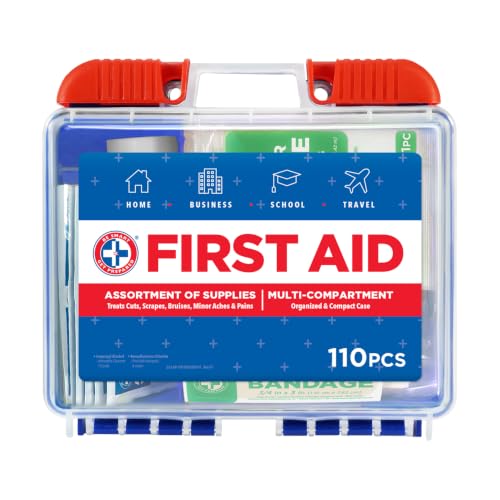
The Be Smart Get Prepared 110 pc First Aid Kit is the compact pick in this guide, and it is the kit to choose when space is tight and the trip is short. It is a small, portable set built around the clean, treat, and protect routine for minor cuts, and the listing describes it as a good fit for home, office, car, school, travel, camping, and sports.
The contents are the classic compact-kit mix: adhesive bandages in assorted sizes, cleansing wipes, gauze pads, antibiotic cream, and the small tools that make basic wound care possible away from a bathroom cabinet. The listing says the kit is FSA and HSA eligible, which is a useful detail for buyers who pay with a flexible spending account. What the kit does not try to do is cover a serious backcountry emergency, and that is an honest limit: with around a hundred pieces, it is a minor-injury kit, not a trauma kit, and campers heading far from a road should pair it with a bigger set or pick one of the larger kits in this guide instead.
Portability is the real reason to pick this kit. It ships from and is sold by Amazon, which means it is a standard, in-stock listing rather than a marketplace-only item, and its small case fits where a big kit cannot: a car door pocket, a bike bag, a day pack, or a tent vestibule. One conflict in the listing is worth knowing: the product name calls it a 110-piece kit, and the model name is the 110pc General First Aid Kit, but the Product information table lists the number of pieces as 100. The listing also shows other piece-count variants in the same family, from 85 pieces up to 330 pieces, so match the model name and the ASIN together and read the contents list on the listing you order.
Specs
| Spec | Detail |
|---|---|
| Brand | Be Smart Get Prepared |
| Model name | 110pc General First Aid Kit |
| Manufacturer | Total Resources International (TRI) |
| Number of pieces | 110 pieces in the product name; the Product information table lists 100 pieces |
| Case | Compact portable case |
| FSA/HSA eligible | Yes |
| Availability | Ships from and sold by Amazon |
| Weight | Not stated in the listing excerpt read |
| Case dimensions | Not stated in the listing excerpt read |
Surviveware Large First Aid Kit

The Surviveware Large First Aid Kit is the mid-range workhorse of this guide, and it is the kit to choose when a whole group shares one kit at a base camp. The listing describes a 238-piece comprehensive set, and that count includes a bonus 50-piece mini kit, which is a clever piece of design: the main kit stays at camp while the mini kit goes out on a day hike, a fishing trip, or a walk to the lake, so the group is covered in two places at once. The bag is made from 600D polyester, a tough, tightly woven fabric that stands up to being tossed into a trunk, dragged across a picnic table, and stuffed into a tent vestibule without tearing.
Organization is where this kit pulls ahead of the budget picks. The listing describes clearly labeled compartments and internal sleeves that can be rearranged, which means a camper can find a bandage or a gauze pad without emptying the whole bag onto a picnic table. The contents cover the full range of minor emergencies: adhesive bandages, gauze, antiseptic wipes, gloves, a CPR mask, an emergency blanket, and the small tools that make wound care practical.
The case deserves a careful look, because it is the part of the kit that takes the most abuse. The 600D polyester bag is rugged and sheds a light shower, but it is not a hard waterproof case, so it should not be left out in heavy rain or dropped in a stream. The listing is FSA and HSA eligible, and the kit is sold by FourCity Brands with shipping from Amazon. Weight is the one detail this guide cannot quote for this kit, because the listing excerpt read did not state it for this exact variant. The brand also sells a waterproof 200-piece version with a listed weight, and that is a different kit with a different ASIN, so this guide does not borrow its numbers. For a family or a group of friends on a car-camping trip, this is the kit that covers the most ground.
Specs
| Spec | Detail |
|---|---|
| Brand | Surviveware |
| Number of pieces | 238, including a bonus 50-piece mini kit |
| Manufacturer part number | FAK002 |
| UPC | 689355233877 |
| Bag | 600D polyester bag |
| Bonus mini kit | 50-piece mini kit included |
| FSA/HSA eligible | Yes |
| Ships from | Amazon |
| Sold by | FourCity Brands |
| Weight | Not stated in the listing excerpt read |
Adventure Medical Kits Mountain Series Hiker

The Adventure Medical Kits Mountain Series Hiker is the lightest kit in this guide, and it is the one built for people who carry everything on their back. It holds 78 pieces and weighs less than 8 ounces, which is a weight that disappears into a pack, and it is designed for one or two people on a two-day trip. Adventure Medical Kits has been the reference brand for wilderness medicine for decades, and the Mountain Series is the line built for the backcountry, with a water-resistant bag and an organization system that keeps supplies findable when a hiker is cold, tired, and in a hurry.
The contents are chosen for the trail, not for a car trunk. The kit includes a trauma pad to control bleeding, an elastic bandage to stabilize a sprain, medicines for pain, allergies, and stomach upsets, and a wilderness first aid guide that explains what to do when help is hours away. The bag uses clearly labeled pockets in a water-resistant shell, so the kit survives a rain shower in an outer pack pocket and the contents stay dry and sorted.
Weight and size are the whole point of this kit. At less than 8 ounces, it is lighter than a water bottle, and its compact bag fits in a pack lid, a hip-belt pocket, or a jacket pocket. That is the trade-off that defines it: it carries fewer pieces than every other kit in this guide, but it carries them where a bigger kit cannot go. One detail to get right when ordering: this kit has appeared under more than one code over the years, and an older listing for the same Hiker kit showed no featured offers available. The code used in this guide is the current one shown in a recent price-history record for the Sunset color, with a current price listed in mid-November 2026, so match the product name, the Sunset color, and the ASIN together before ordering. Do not order the older code, and do not assume that every Mountain Series kit is the Hiker: the Backpacker and the Explorer are different kits for longer trips and larger groups, with different piece counts and different ASINs.
Specs
| Spec | Detail |
|---|---|
| Brand | Adventure Medical Kits |
| Number of pieces | 78 |
| Weight | Less than 8 ounces |
| Bag | Water-resistant bag with clearly labeled pockets |
| Trip length | For 1 to 2 people for 2 days |
| Contents include | Trauma pad, elastic bandage, medicines, wilderness first aid guide |
| Color | Sunset |
| Availability | Current price listed in a price-history record for November 2026 |
ViTAC Advanced Adventurer aFAK
The ViTAC Advanced Adventurer aFAK is the premium pick in this guide, and it is the kit for campers who want a trauma-ready set rather than a bandage box. It holds 182 essential first aid supplies in a MOLLE bag, and it was designed by Special Forces medics, which shows in the way the contents are chosen: the kit is built around the idea that a camping emergency can be more serious than a scrape, and it carries the supplies to manage bleeding, stabilize an injury, and keep a patient safe until help arrives. The bag is black, rugged, and built to attach to a pack or a vehicle with the MOLLE system, which is the webbing standard used on tactical and outdoor gear.
The contents go beyond the basics in a way that sets this kit apart. Alongside the bandages, gauze, and antiseptic supplies that every kit here carries, the Advanced Adventurer includes trauma-focused items and a fuller set of tools, which is why the listing describes it as an outdoor medical trauma kit as well as a first aid kit. The item model number is VT241, and the listing first appeared in late November 2023, which makes it a recent design rather than a repackaged older kit.
The MOLLE bag is a real feature, not a fashion detail. It lets the kit attach to the outside of a backpack, a car seat back, or a camp chair, so it is reachable without opening a pack, and it keeps the supplies organized in a system that a trained user can navigate by touch. The trade-off is weight and bulk: this is a heavier, more serious bag than the light hiker kit above, and it is not the kit to choose when every ounce matters. Check the model number VT241 and the ASIN together when ordering, because ViTAC sells a smaller Adventurer aFAK and a Lite version as well, and those are different kits with fewer supplies and different ASINs.
Specs
| Spec | Detail |
|---|---|
| Brand | VITAC |
| Number of supplies | 182 |
| Item model number | VT241 |
| Date first available | November 28, 2023 |
| Manufacturer | VITAC |
| Bag | MOLLE bag, black |
| Designed by | Special Forces medics |
| Use | Camping, hiking, trekking, tactical |
| Weight | Not stated in the listing excerpt read |
How to Choose a Camping First Aid Kit
Start with the trip, not the piece count. A weekend car-camping trip for two needs a compact or mid-range kit, while a week-long family trip needs a bigger set with more bandages, gauze, and wipes, because a group uses supplies faster than a solo camper. Backpackers should weigh the kit first and count second: a 78-piece kit under 8 ounces that actually goes on the trail beats a 238-piece kit left in the car. Count the people and the days, then pick the kit that fits both.
Look at the case as hard as the contents. A soft-sided case packs flat and suits a car, a hard case protects supplies from crushing and rain, and a water-resistant bag keeps a hiker kit dry in a shower. Read the contents list, not just the number on the box: a useful kit has adhesive bandages in several sizes, gauze pads, antiseptic wipes, adhesive tape, scissors, tweezers, gloves, and an emergency blanket, plus medicines for pain and allergies if the group needs them.
Organization matters more than most buyers expect. A kit with labeled pockets and compartments lets anyone in camp find a bandage without emptying the bag, while a kit that is one big pouch forces a search through everything. Look for a layout that separates wound care, medicines, and tools, and keep the kit in the same place on every trip so everyone knows where it lives.
Finally, plan for the supplies that no ready-made kit knows about. Personal medicines, allergy treatments, and prescription items must be added by hand, and the kit should have room for them. Check expiry dates before every trip, replace anything that has expired, and restock bandages and wipes after every trip. A kit is only as good as its last check, and a five-minute check before leaving home is worth more than a bigger kit that has sat untouched for two years.
Frequently Asked Questions
How many pieces should a camping first aid kit have?
It depends on the trip. A compact kit of around 100 pieces suits a solo camper or a couple on a short trip, a kit of around 200 pieces suits a family car-camping weekend, and a light kit of under 100 pieces suits a backpacker who counts weight. Piece count alone does not show quality, so read the contents list and check that the kit has bandages, gauze, antiseptic supplies, tools, and an emergency blanket rather than a large number of tiny filler items.
Should a camping first aid kit be waterproof?
A water-resistant case or bag is worth having for any trip that involves rain, a river, or a lake, because wet supplies are hard to use. A hard waterproof case gives the most protection, a water-resistant bag gives good protection at a lower weight, and a soft-sided case gives the least protection but packs the easiest. For car camping in dry weather, a soft case is fine. For backpacking or wet weather, choose a water-resistant bag or a hard case, and keep the kit inside a dry bag or a sealed pocket when the rain is heavy.
What is the difference between a hiker kit and a family camping kit?
A hiker kit is light and compact, with fewer pieces chosen for the trail, while a family camping kit is bigger and heavier, with more pieces for a group over several days. The hiker kit in this guide weighs less than 8 ounces and holds 78 pieces for one or two people over two days, while the family kits here hold 200 pieces or more. The hiker kit trades capacity for weight, and the family kit trades weight for capacity, so pick by how the kit travels: on a back, or in a car.
How often should I check and restock a camping first aid kit?
Check the kit before every trip and restock it after every trip. Look at the expiry dates on medicines, ointments, and antiseptic wipes, and replace anything that has expired. Count the bandages, gauze pads, and gloves, and replace what was used. Check that the scissors, tweezers, and emergency blanket are still in the kit, and add any personal medicines the group needs.
Conclusion
The right camping first aid kit is the one that fits your trip, your group, and your pack. The Coleman 205-piece set is the budget pick for car camping, the Be Smart Get Prepared 110-piece kit is the compact pick for short trips and tight spaces, the Surviveware 238-piece set is the mid-range pick for a family base camp, the Adventure Medical Kits Hiker is the light pick for the trail, and the ViTAC Advanced Adventurer is the premium pick for remote trips where a trauma-ready kit matters. Pick by trip length, group size, and weight, read the contents list before ordering, match the product name and the ASIN together, and check the kit before every trip. A good kit is cheap insurance for a camping trip, and the best time to buy one is before you need it.