Key takeaways
- Compare the best air circulators for dorm rooms, from a clip-on bunk fan to a whole-room globe with a remote, on size, noise, speeds and reach.
A dorm room is one small room shared by two people with different schedules and comfort levels, and the real decision is how to cool the whole space instead of one desk. A regular fan blows a narrow stream at whoever sits in front of it and leaves the rest of the room stuffy. An air circulator throws a focused beam that bounces off walls and ceilings and keeps the room’s air moving, so a top bunk, a study desk and the spot by the door all sit closer to the same temperature. It works with the building’s heating and air conditioning instead of fighting them.
The five picks below cover the main dorm setups: a personal fan for one desk, a clip-on for a lofted bed, compact whole-room models for standard doubles, and one large circulator for suites and shared common rooms. Every pick comes from the product names and specifications published on its Amazon page, so speeds, dimensions, noise figures and reach ratings can be compared directly.
Quick Picks
As an Amazon Associate we earn from qualifying purchases.
| Product | Best for | Key spec from title |
|---|---|---|
| Vornado 460 Small Air Circulator | A standard double that needs whole-room airflow | Moves air up to 70 feet |
| IRIS USA Woozoo PCF-SC15 Air Circulator | Changing settings from the bunk without getting up | 5 speeds with remote and oscillation |
| Vornado Pivot Personal Air Circulator | One person’s desk or nightstand stream | 6-inch body with 360-degree adjustable axis |
| Vornado Pivot Clip Personal Air Circulator | Lofted beds and bunk frames with no free surface | Multi-surface clip, 4-inch blade |
| Lasko Elite Collection Cyclone Power Air Circulator | Suites and shared common rooms | 20-inch blade with 4 speeds |
How to Choose
Match the Fan Size to the Surface You Actually Have
Dorm furniture leaves very little spare surface, so start with the spot the fan will live on. A personal circulator around six inches tall fits a nightstand or the corner of a desk, while a compact whole-room model needs a dresser top or a clear patch of floor. Measure the surface and check the published dimensions before ordering, including the height, because a fan that fits on move-in day may clash with a lofted bed frame, a shelf or a mini fridge placed later in the semester.
Judge Reach and Airflow, Not Blade Size Alone
Circulators are rated by how far they move air and, on some listings, by cubic feet per minute, and those figures predict whole-room mixing better than blade diameter. A small fan with a focused vortex beam can even out a standard double, while a large blade with a weak motor mostly stirs the air nearby. Compare the published reach in feet and any stated airflow figure across listings, and treat a listing that publishes neither number as a personal fan, whatever its title claims about whole-room cooling.
Check the Noise Figure Before It Sleeps in Your Room
A dorm fan runs during study hours and often all night, so the published noise level matters as much as power. Listings state decibel figures that are not measured the same way by every brand, but a model published near thirty decibels is built for quiet low settings, while one published above fifty will be audible across a small room. If a listing states no noise figure at all, assume it is a daytime fan until the product page or manual confirms otherwise.
Decide How You Will Control It From Bed
Controls decide whether a fan gets used at two in the morning. A simple dial is fine for a desk fan within arm’s reach, but a whole-room model across the room earns a remote, especially from a top bunk. Clip mounts solve a different problem: they put the fan on the bed frame itself when no surface is free. Match the control style to the placement first, then compare speeds and reach among the models that fit that placement and your half of the room.
The 5 Best Options
Vornado 460 Small Air Circulator

The Vornado 460 is the compact whole-room pick for a standard double, sized for a dresser top at under a foot in each direction. Its listing rates it to move air up to seventy feet with three hundred twenty cubic feet per minute of airflow, which is more than enough throw to bounce a beam off the far wall and mix a small room. Three speeds and an adjustable tilt on a chrome glide bar keep the controls simple, and the dial layout suits a fan that both roommates will adjust by hand.
Specs
- Brand and model: Vornado 460 (CR1-0253-06), Black
- Speeds: 3
- Airflow: 320 CFM; moves air up to 70 feet
- Dimensions: 8.9 x 9.7 x 11.25 inches (D x W x H)
- Weight: 4.25 pounds
- Noise level: 52 decibels
- Wattage: 63 watts
- Controls: dial switch; adjustable tilt
- Power: corded electric, 120 volts, 6-foot cable
Best for: Standard double rooms where one fan has to even out the whole space from a dresser or desk corner.
Watch out for: There is no remote or oscillation, so placement does the aiming; check the eleven-inch height against the clearance under a lofted bed before choosing its spot.
IRIS USA Woozoo PCF-SC15 Air Circulator

The Woozoo PCF-SC15 is the remote-control pick, and the remote is the point in a dorm: speed, oscillation and tilt adjustments happen from the bunk instead of across the room. The listing gives five speeds, a maximum air distance of eighty-two feet and a published noise level of thirty decibels, all in a globe body under nine inches wide that sits on a nightstand. Oscillation plus a ninety-degree adjustable tilt lets it sweep a double room rather than drilling one spot, which suits roommates who share one fan between two beds.
Specs
- Brand and model: IRIS USA Woozoo PCF-SC15 (594329), Black
- Speeds: 5
- Max air distance: 82 feet
- Dimensions: 8.27 x 8.27 x 11.42 inches (D x W x H)
- Weight: 4.2 pounds
- Noise level: 30 decibels
- Wattage: 60 watts
- Oscillation: yes; 90-degree adjustable tilt
- Controls: remote control included
- Power: corded electric
Best for: Sleepers who want to change speed or direction from the bed, and doubles that share one fan between two bunks.
Watch out for: This product line also sells a similar model named SC15T with a different feature set, so confirm the listing title says PCF-SC15 before ordering.
Vornado Pivot Personal Air Circulator

The Pivot is the personal pick for one person’s airspace in a shared room. It stands six inches tall, weighs under two pounds, and its head turns on a three hundred sixty-degree adjustable axis, so it can sit on a desk and aim up at a lofted bunk or down at a study chair without being picked up. Three speeds cover the range from a gentle stream during a call to a stronger flow after a workout. It will not mix a whole suite, and the listing does not pretend otherwise: this is targeted airflow for a single desk, nightstand or shelf.
Specs
- Brand and model: Vornado Pivot (CR1-0281-85), Storm Gray
- Fan size: 6 inches
- Speeds: 3
- Dimensions: 5.1 x 5.7 x 6 inches (D x W x H)
- Weight: 1.7 pounds
- Aiming: 360-degree adjustable axis
- Noise level: not stated
- Wattage: not stated
- Power: corded electric
Best for: One person’s desk or nightstand in a shared room, where a personal stream avoids arguments over a shared fan.
Watch out for: The listing publishes no noise figure, so check the product page details if the fan will run beside a sleeping roommate every night.
Vornado Pivot Clip Personal Air Circulator
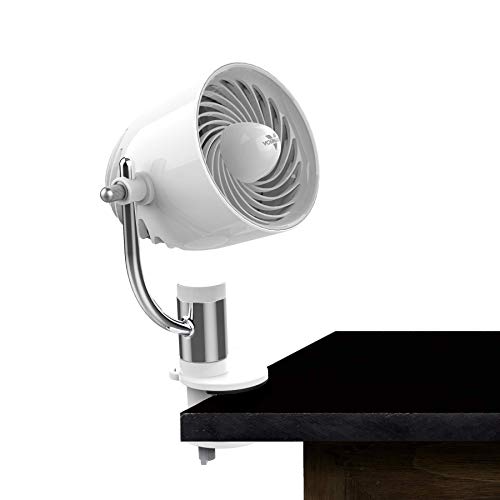
The Pivot Clip solves the lofted-bed problem: when every flat surface belongs to books, a laptop or a roommate, the fan clips to the bed frame, a shelf edge or a desk lip and aims from there. The listing describes a multi-surface clip on a body about nine inches tall with a four-inch blade, three speeds and a head that adjusts through a full circle, so the stream can point down at a pillow or across at a desk. It also stands on a surface like a normal personal fan when a spot frees up.
Specs
- Brand and model: Vornado Pivot Clip (CR1-0387-43), Ice White
- Blade size: 4 inches
- Speeds: 3
- Dimensions: 5.7 x 5.9 x 9.2 inches (D x W x H)
- Weight: 1.8 pounds
- Mounting: multi-surface clip; also stands on a surface
- Aiming: 360-degree adjustable axis
- Noise level: not stated
- Power: corded electric
Best for: Lofted beds and bunk frames where no flat surface is free, and desks with a sturdy edge to clip to.
Watch out for: The clip needs a solid horizontal edge within its grip range, so measure your bed frame or shelf thickness before ordering instead of assuming it clamps anywhere.
Lasko Elite Collection Cyclone Power Air Circulator
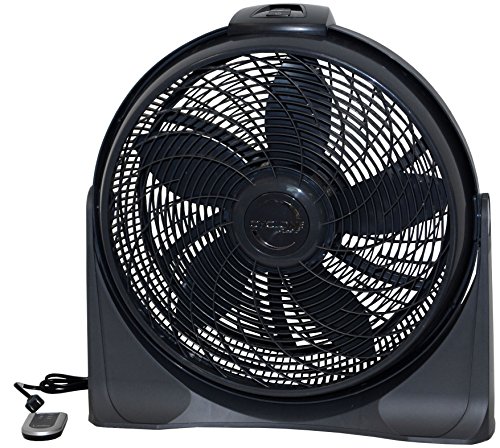
The Lasko Cyclone is the big-room option, a twenty-inch floor circulator for suites, quads and shared common rooms where the compact models run out of reach. Four speeds, a remote control and a brushless motor headline the listing, and the swirling grille design is meant to spread the stream across a wide area rather than push a narrow jet. At over twenty-three inches wide and ten pounds, it is a floor fan in the corner, not a desk fan, and it earns that footprint only where several people share one living space.
Specs
- Brand and model: Lasko Cyclone Power Air Circulator (A20562), Black
- Blade size: 20 inches; 3 blades
- Speeds: 4
- Dimensions: 6.75 x 23.5 x 23.2 inches (D x W x H)
- Weight: 10.2 pounds
- Wattage: 50 watts
- Controls: remote control included
- Motor: brushless
- Airflow (CFM): not stated
- Power: corded electric
Best for: Suites, quads and shared common rooms with real floor space and several people to keep comfortable.
Watch out for: At twenty-three and a half inches wide it will not fit a standard dorm desk, and the listing shows no oscillation, so measure the floor corner and aim the head before settling in.
Which One Fits Your Situation
You Share a Standard Double and the Room Feels Uneven
Start with the Vornado 460. One roommate’s side of a double always sits nearer the vent or the window, and a compact whole-room circulator on the dresser evens that out better than two small desk fans fighting each other. Its published seventy-foot reach covers a double with distance to spare, and the simple dial keeps shared control painless.
Your Bed Is Lofted and Every Surface Is Taken
Choose the Vornado Pivot Clip. A lofted bed traps warm air at pillow height while the desk below stays cool, and a clip-on circulator mounted to the frame puts the airflow exactly at that level. If your frame has no edge the clip can grip, the standard Pivot covers the same personal role from a shelf or nightstand instead.
You Study Late and Sleep Light
Pick the Woozoo PCF-SC15. Its published thirty-decibel noise level is the quietest figure in this group, and the remote means a two-in-the-morning speed change does not involve climbing down from a bunk in the dark. Five speeds also give finer steps between barely moving air and a real stream than the three-speed models here.
You Live in a Suite With a Shared Common Room
Use the Lasko Cyclone for the common room and keep a personal fan at your own desk. A twenty-inch circulator is oversized for a two-person bedroom but right for a shared living space with a couch, a television and four residents, and its remote suits a fan that lives across the room from everyone.
Common Mistakes
- Buying a tall tower or pedestal fan when the actual problem is uneven air, not a weak breeze at one chair.
- Judging a circulator by blade diameter while ignoring the published reach and airflow figures on its listing.
- Skipping the noise specification, then discovering the low setting is still loud enough to bother a roommate at night.
- Forgetting to measure: a fan that fits the desk on paper may collide with a lofted frame, a shelf or the mini fridge.
- Aiming the fan straight at the bed from two feet away instead of placing it to bounce air off a wall or ceiling.
Frequently Asked Questions
How is an air circulator different from a regular dorm fan?
A regular fan cools the person directly in front of it with a wide, soft breeze. A circulator produces a tighter, faster beam designed to travel across the room, bounce off a wall or ceiling and keep all the air moving. In a small dorm room that mixing matters more than raw breeze, because it evens out the warm and cool pockets.
Can one circulator keep two roommates comfortable?
Usually yes, if it is a whole-room model placed to circulate rather than aimed at one bed. A compact circulator with a published reach well beyond the room’s length can even out a standard double. Roommates with very different preferences often do better with one shared circulator for the room plus a small personal fan at the fussier person’s desk.
Where should a circulator sit in a small dorm room?
Place it low or at mid height with a clear path across the room, aimed slightly upward or toward the wall opposite the beds, so the beam travels and returns as mixed air. Keep the intake unblocked by laundry or bedding, and leave a little space behind the fan. A dresser corner or the floor by the door usually works better than the desk itself.
Do air circulators use a lot of electricity?
The models here publish wattage figures between fifty and sixty-three watts, in the same range as a bright lamp, and the personal models draw less. Exact draw varies by speed, with the lowest settings using the least. Check the wattage line on the listing if your building publishes appliance guidance, and run the lowest speed that keeps the air moving.