Key takeaways
- Compare the best high-speed countertop blenders with overload protection: thermal shut-off systems, 1,380-1,800W motors and jars sized for family batches.
Disclosure: As an Amazon Associate, we may earn from qualifying purchases made through links on this page, at no additional cost to you.
A high-speed countertop blender earns its keep on the jobs that stall ordinary machines: frozen fruit straight from the freezer, fibrous greens, nuts, ice and thick doughs. Those same jobs are also the ones that strain a motor hardest. When a blend runs long at low speed, or the jar is packed too tightly for the blades to circulate, motor temperature climbs fast — and without protection, that heat is what burns out windings and shortens the life of an expensive machine.
That is why this guide only covers full-size countertop blenders with a documented overload or thermal protection system: a sensor or switch that shuts the motor down before heat can damage it, then lets you reset and continue once things cool. Every pick below pairs that protection with a motor of roughly 1,380 watts or more, a family-size jar and controls suited to serious daily blending. The four machines take different approaches — two use manual dials and cooling fans, one hides its power behind a sound enclosure with on-screen error messages, and one uses a simple resettable overload protector on a commercial-style base.
Quick Picks
- Best overall: Vitamix 5200 — the long-running 2 HP classic with a radial cooling fan, thermal protection system and a tall 64-ounce container.
- Best for smaller batches: Vitamix Explorian E310 — the same protection approach in a compact 48-ounce format with a 2 HP motor and pulse control.
- Best quiet performer: Blendtec Professional 800 — 1,800 watts behind a sound enclosure, with a display that reports overload and overtemp conditions directly.
- Best commercial-style value pick: Cleanblend Commercial Blender — an 1,800-watt, 3 HP base with a resettable overload protector and a 64-ounce jar.
Vitamix 5200 (ASIN: B008H4SLV6)

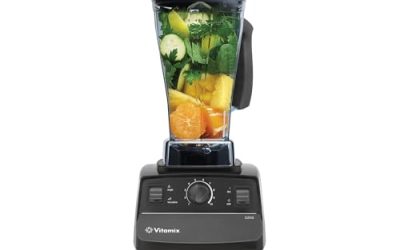
The Vitamix 5200 is the machine that defined this category. Its 2-horsepower motor is rated at 1,380 watts and drives laser-cut stainless-steel blades through a metal drive system, which is part of why these bases hold up to years of daily use. The listing calls out two features that matter directly for this guide: a radial cooling fan and a thermal protection system. The owner’s manual describes the matching automatic overload protection — if the motor overheats, it shuts off, and you reset it by switching the machine off and letting it cool, with Vitamix advising up to 45 minutes in warm rooms. Blending on High, which spins the cooling fan fastest, is the manufacturer’s own tip for avoiding trips.
Control is entirely manual: a variable speed dial from 1 to 10, a High/Variable switch and a separate on/off switch, with no presets or electronics in between. The tall 64-ounce Classic container is made from BPA-free Eastman Tritan copolyester and is shaped to fold ingredients back into the blades, and a tamper is included for thick mixtures. The machine is self-cleaning with warm water and a drop of soap in 30 to 60 seconds, friction heat can bring soup to serving temperature in about six minutes, and the package is backed by a 7-year limited warranty.
Highlights
– Thermal protection system plus radial cooling fan, with automatic overload shut-off documented in the manual
– 2 HP, 1,380-watt motor with a metal drive system and stainless-steel blades
– 64-ounce container with tamper for family-size and thick blends
– 7-year limited warranty
Considerations
– Fully manual controls: no programmed cycles, timer or display
– Tall container profile needs generous clearance under upper cabinets
– Thick, low-liquid loads still need the tamper and short bursts to avoid tripping the protection
Vitamix Explorian E310 (ASIN: B07CVRZ1YJ)

The Explorian E310 is the entry point into the Vitamix range, and it keeps the hardware that matters here: the listing specifies the same radial cooling fan and thermal protection system as the larger models, and the 2-horsepower motor automatically stops if it overheats or is overloaded, then resets after a cool-down. With 10 variable speeds plus a pulse function, it covers the same core work — smoothies, soups, juices, frozen desserts and nut butters — in a smaller footprint that suits couples and small kitchens better than the tall 64-ounce machines.
The 48-ounce container is made from BPA-free Tritan and is paired with a mini tamper for pushing thick mixtures into the blades. The base uses a metal drive system and laser-cut stainless-steel blades, the controls are a simple speed dial with switches rather than a touchscreen, and the whole unit stands 17 inches tall, so it fits under most cabinets where the 5200 will not. Self-cleaning works the same way as on the bigger models, and the E310 is covered by a 5-year full warranty that includes parts, performance, labor and two-way shipping.
Highlights
– Thermal protection system with automatic shut-off on overheat or overload
– 2 HP motor with 10 variable speeds and a dedicated pulse function
– Compact 48-ounce container and 17-inch height for smaller kitchens
– 5-year full warranty including two-way shipping
Considerations
– 48-ounce jar is small for large families or batch meal prep
– No presets or programs; texture control is entirely in your hands
– Slate is the finish on this listing; other colors are separate listings
Blendtec Professional 800 (ASIN: B00LADQ83O)

The Professional 800 is Blendtec’s flagship home machine, built around an 1,800-watt motor, an 11-speed capacitive touch slider and the 90-ounce WildSide+ jar, whose five-sided design pulls ingredients into the blade so no tamper is needed. Its overload protection is electronic and unusually transparent: the Professional 800 owner’s manual documents an Overload Error that appears when the motor load is too heavy, an Overtemp Error that disables the blender until it cools for at least 20 minutes, and an overload switch that stops the blade if the jar is blocked. Instead of guessing why the machine stopped, you read the cause on the display and clear it with the Cancel control once the blockage is removed.
What sets this model apart is the sound enclosure, which brings operating noise down toward normal conversation level — a real benefit if the blender runs early in the morning. The blunt, cold-forged hardened steel blade is designed to pulverize rather than slice, the interface wipes clean, and preprogrammed cycles cover staples such as smoothies, ice cream, whole juice, hot soup and cleaning. The jar and lid are dishwasher safe, and Blendtec backs the machine with a 10-year warranty, the longest coverage in this guide.
Highlights
– Display reports Overload and Overtemp errors, with an overload switch that stops a blocked blade
– 1,800-watt motor with 11-speed touch slider and preprogrammed cycles
– Sound enclosure for dramatically reduced blending noise
– 90-ounce WildSide+ jar and a 10-year warranty
Considerations
– The listing’s own feature table does not spell out the protection system; it is documented in the owner’s manual instead
– Premium-size footprint, and the enclosure adds height and weight
– Touch controls are less tactile than a dial when your hands are wet
Cleanblend Commercial Blender (ASIN: B0094B94BM)
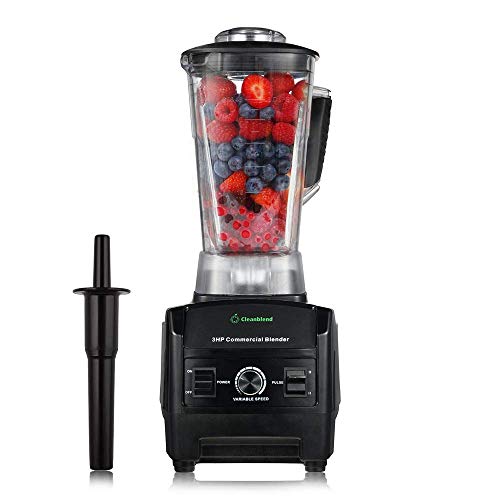
The Cleanblend takes the commercial route: an 1,800-watt motor rated at 3 peak horsepower, a 64-ounce BPA-free Tritan container and controls that could not be simpler — an on/off switch, a variable speed dial and a pulse switch. Its protection is mechanical rather than electronic. The motor carries an overload protector that trips and shuts the machine down if it overheats, and once the unit has cooled — the maker suggests up to 45 minutes — you press the reset button on the underside of the base and blend again. A high-speed cooling system in the base and four anti-slip rubber feet round out a design aimed at hard, frequent use in homes and small cafés.
Blade speed is a headline here: Cleanblend rates the unit at up to roughly 38,000 RPM unloaded, which is how it turns ice to snow and grinds through frozen fruit, nuts and coffee beans. The stainless-steel blade assembly runs in a sealed ball bearing, the jar includes measurement markings and a tamper for thick loads, and the machine handles smoothies, soups, sauces, dough and frozen desserts. It is covered by a 5-year full warranty.
Highlights
– Resettable overload protector trips the motor on overheating, with a reset button under the base
– 1,800-watt, 3 HP motor with very high blade speeds for ice and frozen ingredients
– 64-ounce BPA-free container with tamper included
– Simple dial-and-switch controls with a 5-year full warranty
Considerations
– No display or error codes: a trip is just a stop, and you diagnose the cause yourself
– Tall profile, so measure cabinet clearance before ordering
– Manual reset means waiting for the cool-down before the button will hold
How to Choose
Start with the protection system itself, because the styles behave differently. A thermal protection system, like the one in the Vitamix models, senses motor temperature and shuts the machine down before damage occurs; you then wait for a cool-down and restart. An electronic system, like Blendtec’s, adds information: the display distinguishes an overload (too heavy a load or a blockage) from an overtemp condition (the motor needs rest), which makes the fix faster. A resettable mechanical protector, like Cleanblend’s, is the simplest of the three — effective, but you press a button under the base and get no diagnostics.
Next, match motor and jar to your actual workload. All four machines here sit between 1,380 and 1,800 watts, which is the range that handles ice, frozen fruit and nut butters without bogging down. Jar size matters just as much: 48 ounces suits one or two servings and small kitchens, 64 ounces is the family standard, and a 90-ounce jar only makes sense if you regularly blend for a crowd. Remember that a bigger jar has a higher minimum batch — small amounts can splash above the blades in an oversized container.
Then consider controls and noise. Manual dials are intuitive, repairable and precise for texture work, but they ask you to stand at the counter. Preprogrammed cycles let you walk away, and a display that reports errors shortens troubleshooting. If the blender will run while others sleep, a sound enclosure is worth more than raw power. Finally, look at warranty length and what it covers: the picks here range from 5 to 10 years, and full warranties that include shipping both ways are worth more than longer-sounding coverage with exclusions.
Key Specifications Explained
Wattage and horsepower. Wattage is the electrical power the motor draws; horsepower is the mechanical output makers derive from it, and peak horsepower figures describe a brief maximum rather than a sustained rate. Treat both as rough guides to strength rather than exact measures, and weigh them alongside blade design and jar shape.
Overload vs. thermal protection. The terms overlap. Overload protection reacts to excessive load or current — a jammed blade or an overfilled jar. Thermal protection reacts to temperature. Many machines combine both: the load causes the heat, and the system cuts power before the heat damages the motor. What matters is that the shut-off exists, that it is automatic, and that the reset procedure is simple.
Cooling fans. A radial cooling fan moves air across the motor while it runs. Counterintuitively, high speeds are often easier on the motor than low ones, because the fan spins fastest on High. Long, slow blending of thick mixtures is the classic way to trip protection even on well-cooled machines.
Reset procedure. Depending on the model, resetting means waiting 20 to 45 minutes and switching back on, clearing an error on a display, or pressing a physical reset button after the cool-down. None of these indicate a defect by themselves; repeated trips in normal use, however, are a sign the load or technique needs adjusting.
Container material and size. The jars here are BPA-free Tritan copolyester, which is lighter than glass, resists shattering and handles hot blends. Capacity figures describe the full jar volume; the practical blending maximum is lower, especially for hot liquids, which expand and spray if overfilled.
Setup and Use Tips
Unpack and wash the jar, lid and tamper before first use, set the base on a flat, dry surface with clearance around its vents, and run a self-cleaning cycle of warm water and a drop of soap to clear any factory residue. Check that the jar seats fully on the drive socket; several protection systems also monitor whether the container is correctly in place.
Load the jar in the order that protects the motor: liquids first, then soft ingredients, then leafy greens, and frozen items and ice last, on top. Start every blend on the lowest speed and ramp up, rather than starting on High with a packed jar. For thick mixtures such as nut butter or hummus, use the tamper to press ingredients into the blades, work in short runs, and keep total processing near the maker’s guidance — Vitamix, for example, warns against running nut butters for more than about a minute after the mixture starts circulating.
If the protection trips, do not keep flipping the switch. Turn the machine off, unplug it, remove the jar and check for a blockage or an overfilled load. Let the base cool for the full period the manual specifies — roughly 20 minutes for the Blendtec, up to 45 minutes for the Vitamix and Cleanblend in warm rooms — then reset and restart with a slightly smaller or wetter load, using Pulse to work the blade free before running a full cycle.
Common Mistakes to Avoid
- Blending thick loads slowly for minutes at a time. Low speeds starve the cooling fan. Ramp to High for heavy work so the fan can do its job.
- Overfilling the jar. A load packed past the blades’ reach circulates poorly, strains the motor and invites an overload trip. Blend in two batches instead.
- Restarting immediately after a trip. The protection reset needs a genuinely cool motor. Restarting early just trips it again and adds heat stress.
- Ignoring the first trip as a fluke. A single trip is information: the load was too big, too dry or too cold. Adjust the recipe rather than repeating it.
- Blocking the base vents. Pushing the blender tight against a wall or under a low cabinet traps hot air around the motor and makes trips more likely.
- Skipping the tamper on thick blends. An air pocket around the blade (cavitation) makes the motor race without moving food, which heats it without blending anything.
FAQ
What does overload protection actually do on a blender?
It monitors the motor for excessive load or heat and cuts power automatically before the windings can be damaged. After a cool-down period, you reset the machine — by switching it back on, clearing an error message or pressing a reset button, depending on the model — and continue blending.
Is a blender that shuts off mid-blend defective?
Usually not. A shut-off during a heavy load is the protection system working as designed, most often triggered by an overfilled jar, a very thick or dry mixture, or a long run at low speed. If trips happen during light, ordinary blending, that is when to contact the manufacturer.
Does overload protection replace careful technique?
No. It is a safety net, not a license to overfill the jar or run dough for ten minutes. Loading liquids first, ramping speed up, using the tamper and respecting batch sizes will keep trips rare and extend the motor’s life far more than the shut-off alone.
Why do high-speed blenders trip more often on low speeds?
Because the cooling fan is driven by the motor itself. On low settings the fan moves little air while thick ingredients still load the motor heavily, so heat builds quickly. Manufacturers of fan-cooled models recommend doing heavy work on High, where airflow is strongest.
How long should I wait before resetting after a trip?
Follow the manual for your model. The machines in this guide specify roughly 20 minutes for the Blendtec Professional 800 and up to 45 minutes for the Vitamix 5200 and Cleanblend in warm conditions. Unplugging the machine and removing the jar speeds cooling.
Final Verdict
For most kitchens, the Vitamix 5200 is the benchmark pick: a proven 2 HP motor, a thermal protection system backed by a documented automatic overload shut-off, and manual controls that will still make sense a decade from now. Choose the Explorian E310 if you want the same protection philosophy in a smaller, lower-profile package for one or two people. Pick the Blendtec Professional 800 if noise matters or you want the machine to tell you exactly why it stopped, and the Cleanblend if you prefer commercial-style simplicity — big power, a dial, and a reset button — with the longest jar-to-motor value in the group. Whichever you choose, the protection system is doing its job only if you rarely meet it: load sensibly, blend heavy work on High, and let a trip change the recipe, not just the timer.