Our Short List of 3
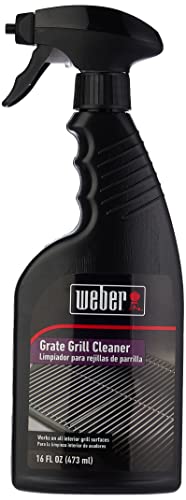
- Best for: Weber owners who want one manufacturer-matched degreaser for porcelain-enamel and stainless cooking grates.
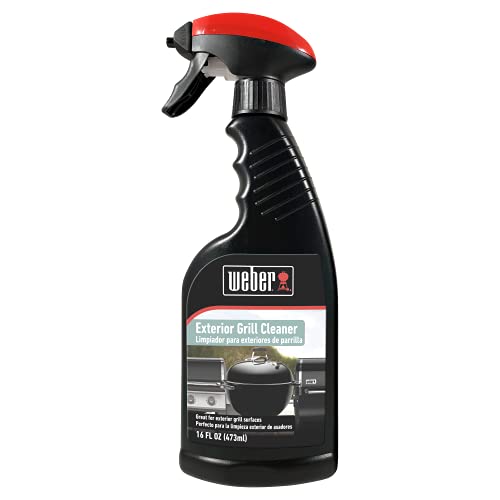
- Best for: keeping Weber lids, side tables, and exterior panels streak-free between cooks.

- Best for: frequent cleaners who prefer a citrus-based, non-corrosive formula for Weber grates.
All 4 Picks at a Glance
| Product | Specs | Action |
|---|---|---|
| 1. Weber Grill Grate Cleaner and Degreaser — The Brand-Matched Grate Spray |
| Check price on Amazon |
| 2. Weber Exterior Grill Cleaner — The Lid and Side Table Spray |
| Check price on Amazon |
| 3. Citrusafe BBQ Grill Grate Cleaner — The Citrus-Based Alternative |
| Check price on Amazon |
 4. Goo Gone Oven and Grill Cleaner — The Heavy-Duty Foam |
| Check price on Amazon |
Key takeaways
- The best grill cleaner for Weber grills matches the cleaner to the surface: grate degreasers for porcelain-enamel and stainless grates, exterior sprays for lids and side tables.
As an Amazon Associate I earn from qualifying purchases.
Cleaning a Weber Is a Surface Problem, Not a Strength Problem
Ask for the best grill cleaner for weber grills and the honest answer is that there is no single bottle, because a Weber is not one surface. A typical Genesis, Spirit, or kettle grill combines porcelain-enamelled cast iron or steel cooking grates, a porcelain-enamelled lid and firebox, stainless steel trim and Flavorizer bars, and painted steel side tables and frames. The cleaner that strips carbonised grease off a cooking grate can dull a lid, and the polish that makes stainless trim gleam is wasted inside the firebox. The right question is which cleaner belongs on which surface, and that is how this guide is organised.
Every pick below is a grill cleaning product — a degreaser, a grate cleaning solution, or an exterior cleaner formulated for the finishes Weber actually uses. There are no brushes, scrapers, or tools mixed in, and no general household degreasers that stay silent about grill surfaces. Where a product’s label excludes a surface, that exclusion is stated in its section, because on a porcelain-enamel finish the wrong chemistry is not a minor mistake. Product details are taken from manufacturer descriptions and Amazon US listings; this guide compares published specifications and label directions, and makes no detailed research claims.
Two Weber-made products — the Stubborn Stain Remover and the Stainless Steel Polish — are analysed without purchase links. Both are real, current Weber cleaning products with verifiable specifications, but we could not obtain a clean, verifiable standalone Amazon US listing link for either at the standard this guide requires, so they are covered on specification alone and the reason is stated in their sections. The four linked picks were verified against their Amazon US product pages.
Quick Comparison
| Cleaner | Type | Made For | Key Label Point | Best For |
|---|---|---|---|---|
| Weber Grill Grate Cleaner and Degreaser | Ready-to-use spray | Cooking grates, interior components | Non-toxic, non-flammable, non-corrosive, phosphate free | Routine grate degreasing |
| Weber Exterior Grill Cleaner | Ready-to-use spray | Lids, side tables, exterior panels | Streak-free on stainless, painted steel, porcelain-enamel | Everyday exterior wipe-downs |
| Citrusafe BBQ Grill Grate Cleaner | Citrus-based spray | Grates, smokers, ovens, microwaves | Citrus formula, 23 fl oz bottle | Plant-based routine cleaning |
| Goo Gone Oven and Grill Cleaner | Foaming spray | Grill exteriors, racks, grates | Surface-safe foam, clings to vertical surfaces | Heavy baked-on grease |
| Weber Stubborn Stain Remover | Concentrated liquid | Exterior painted and enamel surfaces | Not for stainless steel or scratch-prone surfaces | Carbon and varnish staining |
| Weber Stainless Steel Polish | Polish spray | Stainless steel trim and lids | Cleans, polishes, and protects in one step | Fingerprints and water marks |
1. Weber Grill Grate Cleaner and Degreaser — The Brand-Matched Grate Spray
- Best for: Weber owners who want one manufacturer-matched degreaser for porcelain-enamel and stainless cooking grates.
Weber owners who want one manufacturer-matched degreaser for porcelain-enamel and stainless cooking grates.
The safest starting point for any Weber owner is the cleaner Weber formulated for its own grates. The Grill Grate Cleaner and Degreaser is a ready-to-use spray in a 16 ounce bottle, designed for interior grill components and cooking grate surfaces on both gas and charcoal grills. Weber states it removes burnt-on residue and is safe and effective on both porcelain-enamelled cast iron grates and stainless steel grates — the two grate materials that cover nearly the entire Weber range, from a kettle’s plated steel up to a Summit’s stainless rods.
The formula profile is the reason it leads this guide. Per the product description, it is non-toxic and safe on skin, non-flammable, non-corrosive, biodegradable, and phosphate free. Non-corrosive is the operative word for Weber ownership: porcelain enamel is a glass coating, and aggressive alkaline oven chemistry can attack it over repeated use, while bare cast iron needs a cleaner that will not strip and flash-rust it the moment it dries. A degreaser designed around those exact materials removes the guesswork. Weber also lists smokers, ovens, and microwaves as suitable secondary uses, which makes the bottle easier to justify in a cleaning cabinet.
Use it the way the label intends: on a cool grill, spray the grates and interior surfaces, give the formula time to loosen the residue, then wipe or scrub and rinse the cooking surfaces before the next cook. It is a maintenance degreaser, not a restoration product — a grate carrying seasons of carbonised buildup will need repeated applications and mechanical help, and the spray’s job is to make that work shorter each time. As the default bottle to keep next to a Weber, nothing else here is as precisely matched to the assignment.
See the Weber Grill Grate Cleaner and Degreaser on Amazon
2. Weber Exterior Grill Cleaner — The Lid and Side Table Spray
- Best for: keeping Weber lids, side tables, and exterior panels streak-free between cooks.
keeping Weber lids, side tables, and exterior panels streak-free between cooks.
The outside of a Weber suffers a different kind of dirty: grease mist from the cook, water spots from weather, road dust, and fingerprints on every handle and trim piece. Weber’s Exterior Grill Cleaner is the companion spray built for those surfaces. It is applied to cool exterior surfaces to remove water spots, grease, grime, and general outdoor residue, and Weber specifies that it leaves a streak-free shine on painted steel, stainless steel, and porcelain-enamel surfaces — which is, not coincidentally, a complete list of what the outside of a Weber is made from.
The distinction between this and the grate cleaner matters more than the similar bottles suggest. A grate degreaser is formulated to work hard on a food-contact surface and then be rinsed and burned off; an exterior cleaner is formulated to finish — to wipe away cleanly without leaving a film that shows every streak in sunlight on a glossy black lid. Using the grate spray on the lid will clean it, but the exterior spray is the one designed to make it look cleaned. The bottle is the 16 ounce exterior formula, model 8028 in Weber’s cleaning range.
Its limits are the mirror image of the grate cleaner’s. This is not the product for the inside of the firebox or for carbonised cooking grates, and it should only be used on cool surfaces, as the label directs. Paired with the grate cleaner, though, it completes the two-bottle system Weber itself sells for its grills: one chemistry for where the food goes, one for everything the neighbours see.
See the Weber Exterior Grill Cleaner on Amazon
3. Citrusafe BBQ Grill Grate Cleaner — The Citrus-Based Alternative
- Best for: frequent cleaners who prefer a citrus-based, non-corrosive formula for Weber grates.
frequent cleaners who prefer a citrus-based, non-corrosive formula for Weber grates.
Not every Weber owner wants a petroleum-chemistry degreaser, and Citrusafe built its name on the alternative: a citrus-based cleaning spray that uses citrus extracts as the degreasing engine. The BBQ Grill Grate Cleaner comes in a 23 fluid ounce bottle — the largest container among the spray picks in this guide — in a liquid, citrus-scented formula listed for grill use, and sold and shipped by Amazon itself, which makes it one of the easier third-party cleaners to source consistently.
The published descriptions position it as a non-toxic, non-corrosive, biodegradable, phosphate-free cleaner for grates and, beyond the grill, for cookers, smokers, ovens, and microwaves. Non-corrosive is again the property that matters for Weber surfaces, since it keeps a cleaner compatible with porcelain-enamelled grates rather than slowly etching them. Citrus-based degreasers soften grease rather than saponifying it the way caustic oven cleaners do, which suits regular Weber maintenance: spray a cool grate, let the formula dwell, wipe and scrub, rinse, and the grate is ready.
Set expectations by soil level. A citrus maintenance cleaner is at its best on the grease of recent cooks and on the routine film that builds up over a month of weekends; it is not the fastest route through a full season of neglected carbon, where the foaming pick below or repeated applications earn their keep. For owners who clean often — the habit that keeps any grill cleaner effective — it is a genuinely pleasant formula to use often, with a citrus scent instead of a chemical one.
See the Citrusafe BBQ Grill Grate Cleaner on Amazon
4. Goo Gone Oven and Grill Cleaner — The Heavy-Duty Foam
- Best for: deep-cleaning a neglected Weber, where baked-on grease needs a clinging foam and a long dwell.
deep-cleaning a neglected Weber, where baked-on grease needs a clinging foam and a long dwell.
When the job has moved past maintenance into rescue, the Goo Gone Oven and Grill Cleaner is the strongest tool in this guide. It is a 28 ounce foaming spray from Weiman’s Goo Gone line, formulated to remove tough baked-on grease and food spills, and listed as surface safe. The foam format is the functional difference: instead of running off vertical surfaces the way a thin liquid does, the foam clings to the inside of a lid, the walls of a firebox, and upright grate sections, holding the chemistry against the soil for its full dwell time.
For a Weber, that cling makes it the pick for the neglected grill — the kettle that sat through winter with the vents closed, or the gas grill whose grates and Flavorizer bars carry a full season of carbonised drippings. The manufacturer’s positioning covers ovens and grills together, including racks and broiler pans, and the formula is designed to cut the baked-on layer that maintenance sprays only soften. It is also the pick that demands the most label discipline in this guide: work on a cool grill, ventilate, keep the foam on the surfaces it is intended for, and rinse food-contact surfaces thoroughly before cooking again.
One boundary deserves stating plainly. This is a heavy-duty degreaser for interior and cooking surfaces, not a finishing product for glossy exterior panels, and it should not be sprayed across a porcelain-enamel lid as a cosmetic cleaner — that is the exterior spray’s job, two sections up. Used in its lane, it is the strongest degreasing step available here, and the one that makes the maintenance cleaners’ job easy again afterwards.
See the Goo Gone Oven and Grill Cleaner on Amazon
5. Weber Stubborn Stain Remover — The Exterior Stain Specialist
A note on this pick: the Stubborn Stain Remover is analysed without a purchase link. It is sold as part of Weber’s cleaning range and its specifications are verifiable from Weber’s own product documentation, but we could not verify a clean standalone Amazon US listing for it at the standard this guide requires, so no link is attached.
Some Weber grills develop a stain that ordinary exterior cleaning will not move: the brown-black varnishing and carbonisation marks that bloom around the lid edges and firebox seams of a hard-used grill. The Stubborn Stain Remover is Weber’s concentrated answer, a 6 fluid ounce unscented liquid applied with a quality paper towel or cloth directly to the stain. Per Weber’s documentation, it is formulated to remove stains caused by grease, varnishing, and carbonisation from painted steel, porcelain-enamel, and painted cast aluminium surfaces, and Weber recommends following it with the Exterior Grill Cleaner for the finished result.
Its safety data carries the most important line in this section: the product is a glass and enamel surface cleanser, and its documentation advises against use on stainless steel or scratch-prone surfaces. That is the opposite instinct from most cleaning — the specialist stain remover is for the painted and enamelled panels, while stainless trim belongs to the polish below. Respecting that split is exactly how a Weber keeps its finishes intact: each of Weber’s own cleaners has a defined surface list, and the stain remover’s list is painted and enamelled exteriors only.
Best for: lifting carbon and varnish staining from a Weber’s painted or porcelain-enamel exterior panels.
6. Weber Stainless Steel Polish — The Finishing Step
A note on this pick: the Stainless Steel Polish is analysed without a purchase link, for the same reason as the stain remover above — it is a verifiable Weber product, but no clean standalone Amazon US listing could be confirmed at the standard this guide requires.
A stainless-trimmed Weber — a Genesis or Summit with a stainless lid, doors, and trim — shows every fingerprint and water spot, and ordinary cleaners leave it clean but dull. Weber’s Stainless Steel Polish is the finishing product: a 12 ounce spray with a citrus scent that cleans, polishes, and protects stainless steel in one step, removing fingerprints, dirt, and water marks and leaving a protective layer that slows their return. Weber also lists it for indoor stainless appliances, which makes the bottle work double duty in most kitchens.
Polish is a cosmetic and protective step, not a degreaser, and the order of operations matters. Degrease first with the appropriate cleaner for the surface, let it dry, then polish the stainless. Applying polish over grease simply seals the dirt under a shine. Used last in the routine, it is the difference between a grill that is clean and a grill that looks new — and on stainless Weber models, that visible finish is a large part of what the owner paid for.
Best for: the final pass on stainless Weber lids and trim, after degreasing is done.
How to Choose the Right Cleaner for Your Weber
Match the cleaner to the surface first. Cooking grates and interior components take a grate degreaser; lids, side tables, and panels take an exterior cleaner; stainless trim finishes with a polish. Most disappointment with grill cleaners is a surface mismatch, not a weak formula.
Check the grate material before you buy. Porcelain-enamelled cast iron, porcelain-enamelled steel, and stainless steel grates all appear across the Weber range, and they do not forgive the same chemistry. Non-corrosive formulas are the safe default for enamel; whatever you choose, confirm the label names your grate material.
Scale the strength to the soil. A grill cleaned monthly needs only a maintenance spray. A grill cleaned yearly needs the foam first and the maintenance spray after. Buying the strongest product for a light job wastes effort on rinsing and ventilation; buying the gentlest for a heavy job wastes an afternoon.
Clean cool, rinse food-contact surfaces, and dry cast iron. Every spray in this guide is directed at cool surfaces. After degreasing grates, rinse and then heat the grill before the next cook to burn off any residue. Bare or enamelled cast iron grates should be dried promptly and oiled lightly, which is the habit that keeps them from rusting between cooks.
Keep the two-bottle system. The simplest routine covering a whole Weber is one grate degreaser plus one exterior cleaner, with polish added if your model wears stainless trim.
Frequently Asked Questions
Can I use oven cleaner on my Weber grates?
Generic caustic oven cleaner is a risk on Weber finishes, particularly porcelain enamel, which it can dull or damage with repeated use, and it demands thorough rinsing on food-contact surfaces. The grill-specific degreasers in this guide are formulated for these materials; if you do use a heavy-duty oven and grill product like the Goo Gone pick, follow its label exactly and rinse grates thoroughly.
How often should I degrease the grates?
A light degreasing after every few cooks keeps the job small, and a deep degrease at the start and end of the season handles what accumulates underneath. The longer carbonised grease sits, the more it affects flavour and flare-ups, and the stronger the cleaner you will need.
Is the exterior cleaner safe on a porcelain-enamel lid?
Yes — Weber lists porcelain-enamel among the surfaces its Exterior Grill Cleaner is made for, along with painted steel and stainless steel, on cool surfaces. The product to keep off the wrong panels is the stain remover, which is for painted and enamelled surfaces and is specifically not for stainless steel.
Why does my stainless lid still look streaky after cleaning?
Because degreasing and finishing are different steps. A cleaner removes the grease but can leave mineral streaks from the water in the wipe-down. Dry the surface fully, then use a stainless polish as the final pass — that is the step designed to leave the uniform finish.
Do citrus cleaners really cut grill grease?
For routine grease, yes. Citrus-based formulas soften and lift fresh and moderate grease effectively, which is why they suit frequent maintenance. Their limit is old, carbonised buildup, where a clinging heavy-duty foam and a longer dwell do the work faster.
The Bottom Line
Start with the two bottles Weber formulated for its own grills: the Grill Grate Cleaner and Degreaser for porcelain-enamel and stainless cooking grates, and the Exterior Grill Cleaner for lids, tables, and panels. Add the Citrusafe spray for a citrus-based maintenance routine, and keep the Goo Gone foam for the annual rescue of a neglected grill. Finish stainless models with Weber’s polish, and reserve the Stubborn Stain Remover for carbon marks on painted and enamelled panels. Matched to their surfaces, these six cleaners cover every square inch of a Weber with the chemistry that surface was designed for.