Key takeaways
- Five vertical masticating juicers compared for carrot juice, with slow augers, wide chutes and pulp control, so you can choose the right machine.
Carrots are dense, fibrous and hard, so the real decision behind a carrot juicer is not which machine looks tidy on a counter. It is which slow auger can crush a whole carrot without stalling, clogging or leaving wet pulp behind. A vertical masticating juicer presses produce slowly between an auger and a strainer, and the details that matter for carrot juice are auger torque, feed chute size, pulp control and how quickly the parts rinse clean after a sticky batch.


This guide is for daily carrot juice drinkers, households that juice carrots with apples and ginger, and anyone moving away from a centrifugal machine that leaves too much juice in the pulp. Every juicer below is a vertical slow juicer picked from its Amazon listing name and listed specifications, and each one is built to handle hard roots such as carrots, beets and ginger.
Quick Picks
As an Amazon Associate we earn from qualifying purchases.
| Product | Best for | Key spec from title |
|---|---|---|
| Omega VSJ843QS | Daily carrot juice with steady, jam-free running | 43 RPM slow auger, 150 watts |
| Hurom H-AA | Smooth, low-pulp carrot juice you can tune | 43 RPM Slow Squeeze, fine and coarse strainers |
| Kuvings EVO820GM | Whole carrots with almost no chopping | 82 mm flip-gate chute, 240 watts |
| Ninja JC151 NeverClog | Compact kitchens and pulp control | Total Pulp Control, 24 oz juice jug |
| Tribest Slowstar SW-2000 | Hard roots and mincing extras | 47 RPM, 200-watt motor, duo-blade auger |
How to Choose
Auger speed and torque for hard carrots
A slow auger in the 40 to 60 RPM range gives a carrot time to be crushed and pressed instead of being spun and thrown against a strainer. Torque matters more than the wattage number on the box, because a hard root needs steady force to keep moving through the feed tube. Look for a listing that names a low RPM figure and describes a multi-stage or duo-blade auger, which signals the machine was built for dense produce. A juicer that stalls on the first carrot of the morning will not survive a daily habit, so treat steady low-speed crushing as the first filter, not an afterthought.
Feed chute size and prep time
Carrots are long and awkward to cut, so chute size decides how much knife work each glass of juice demands. A wide chute of around three inches takes a whole small carrot or a thick chunk of a large one, while a narrow chute means cutting every root into short sticks before juicing starts. That difference adds up fast when a household juices a full bag of carrots at the weekend. Check the chute width in the listing and picture your usual carrot: if it would need more than one cut to fit, the machine will slow you down every single morning.
Pulp control and juice texture
Carrot juice should feel smooth, not gritty, and pulp control is what decides the texture in the glass. Some vertical juicers ship with two strainers, a fine one for clear juice and a coarse one for a thicker drink, while others use interchangeable pulp filters that switch the same machine between low-pulp and high-pulp results. Think about who drinks the juice: children and guests usually prefer a smoother glass, while a thicker juice suits someone who wants more fiber in the drink. A control lever or a second strainer in the box gives you that choice without buying a second machine.
Cleaning and counter space
A carrot juicer earns its place by being easy to rinse, because dried carrot pulp hardens on a strainer and turns a five-minute job into a chore. Look for parts that come apart without tools, a cleaning brush in the box, and dishwasher-safe pieces for the jug and pulp container. Height matters too: a tall vertical juicer may not fit under a low wall cabinet, so measure the space between counter and cabinet before choosing. A machine that lives on the counter gets used; one that lives in a cupboard because it never fit does not.
The 5 Best Options
Omega VSJ843QS
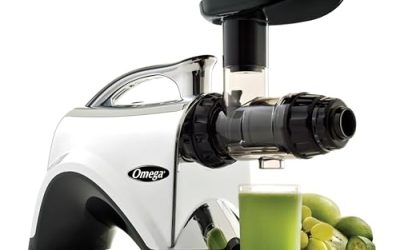
The Omega VSJ843QS is the steady workhorse of this group, and it suits a household that juices carrots every day without wanting a fussy machine. Its 43 RPM auger turns slowly enough to press hard roots firmly, and the dual-edge auger plus automatic pulp ejection keep a long juicing session moving instead of stopping to clear a jam. The no-drip tap closes while you mix a batch and again when you lift the jug away, so the counter stays clean. With a vertical body and a long coverage period on parts and performance, it is built for a daily habit rather than occasional use.
Specs
- 43 RPM slow masticating auger
- 150-watt motor
- Dual-edge auger with automatic pulp ejection
- No-drip juice tap
- 15-year coverage on parts and performance
- Juices fruits, vegetables, leafy greens and wheatgrass; also makes nut milks
Best for: households that juice carrots every morning and want a machine that keeps running through a full batch.
Watch out for: the narrow feed opening means carrots need cutting into short pieces first; check the height against your cabinet clearance.
Hurom H-AA
The Hurom H-AA is the pick for anyone who cares most about the texture of the finished juice. Its 43 RPM Slow Squeeze auger presses carrots gently, and the fine and coarse strainers plus the control lever let you choose between a clear, smooth glass and a thicker, more pulpy one. The 500 ml chamber holds enough for a couple of glasses before emptying, and the machine also handles leafy greens, nuts and soybeans, so it earns its counter space beyond carrot season. Alpha technology keeps the design slim, which helps in a kitchen where every inch counts.
Specs
- 43 RPM Slow Squeeze Technology
- 150-watt motor
- 500 ml (16.9 oz) juicing chamber
- Fine and coarse strainers with a pulp control lever
- BPA-free parts
- Also makes ice cream from frozen ingredients
Best for: drinkers who want to tune pulp level glass by glass, from smooth to thick.
Watch out for: the slim chamber fills fast on a big carrot batch, so empty it between rounds; confirm the color variant, since each color carries its own listing.
Kuvings Whole Slow Juicer EVO820GM
The Kuvings EVO820GM is the answer to the most tedious part of carrot juicing: the chopping. Its 82 mm flip-gate chute takes whole small carrots and large chunks of big ones, so a morning batch starts with rinsing rather than a cutting board. The 240-watt motor runs the auger at a low speed, and the smoothie and blank strainers in the box extend the machine to thick drinks and frozen desserts. A leather-like finish and a 10-year warranty round out a machine built for a household that juices in volume and hates prep work.
Specs
- 50 RPM low-speed masticating technology (per the Amazon listing)
- 240-watt motor
- 82 mm wide feeding chute with flip gate
- Smoothie and blank strainers included
- BPA-free components
- 10-year warranty
Best for: busy households that juice whole carrots and large batches with as little chopping as possible.
Watch out for: the tall body needs headroom under wall cabinets, and the listing RPM figure conflicts with some retailer pages, so confirm it on the live listing.
Ninja NeverClog Cold Press Juicer JC151

The Ninja JC151 is the compact pick, and it suits a small kitchen where a juicer must fit under the cabinets and still handle hard roots. Total Pulp Control gives you two interchangeable filters, so the same machine pours a smooth glass for one person and a pulpier glass for another. The 24 oz juice jug and 36 oz pulp container cover a family breakfast batch, and the parts that touch juice go in the dishwasher. Two one-touch programs and a reverse function keep a stuck carrot moving without taking the machine apart.
Specs
- 150-watt high-torque motor
- Total Pulp Control with 2 interchangeable pulp filters
- 24 oz juice jug and 36 oz pulp container
- 2 one-touch programs with forward and reverse
- Anti-drip lever
- Dishwasher-safe parts
Best for: small kitchens and families who want different pulp levels from the same machine.
Watch out for: the jug holds 24 oz, so a large batch needs emptying mid-way; check the charcoal color listing, since renewed units appear under a separate listing.
Tribest Slowstar SW-2000
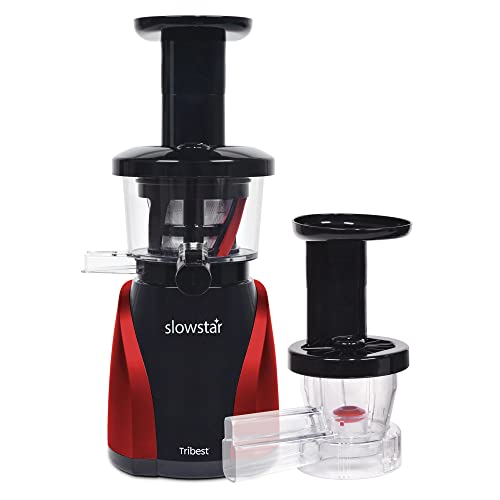
The Tribest Slowstar SW-2000 is the torque pick for the hardest produce in the basket. Its 200-watt motor drives a duo-blade Ultem auger at 47 RPM through 3-stage reduction gears, which is the combination that keeps dense carrots moving without stalling. The mincing attachment in the box turns the same machine into a tool for sorbets and sauces, so it does more than juice. A detachable drip-free cap keeps the counter clean when you swap containers, and the 10-year limited warranty backs a machine meant for years of daily use.
Specs
- 47 RPM slow masticating extraction
- 200-watt motor with 3-stage speed reduction gears
- Duo-blade Ultem auger
- Mincing attachment included
- 1-liter juicing capacity with two 26 oz pulp and juice collectors
- 10-year limited warranty
Best for: heavy daily juicing of hard roots, plus mincing and frozen desserts from the same machine.
Watch out for: it is one of the taller machines here, so check the height against your cabinet clearance; the red finish is the listing to match, since other colors may sit under separate listings.
Which One Fits Your Situation
You juice carrots every morning before work
Pick the Omega VSJ843QS or the Ninja JC151. The Omega keeps a long session moving with automatic pulp ejection, while the Ninja fits under low cabinets and rinses fast. Either way, cut the carrots the night before and store them in water, so the morning routine is feed, press and rinse.
You juice carrots with apples, ginger and leafy greens
Pick the Hurom H-AA or the Tribest Slowstar SW-2000. The Hurom strainers and control lever handle the switch from hard roots to soft fruit and leaves, while the Slowstar torque keeps ginger and fibrous greens moving. Juice the carrots first, then the softer produce, so the hard roots push the rest through.
You have a small kitchen and a tight counter
Pick the Ninja JC151. It is the most compact machine here, it fits under standard wall cabinets, and the jug and pulp container tuck away with it. Skip the taller models unless you have open shelving or a spare stretch of counter, because a juicer that never fits the space ends up stored away and unused.
You want one machine for juice, sorbet and nut milk
Pick the Kuvings EVO820GM or the Tribest Slowstar SW-2000. The Kuvings blank strainer covers frozen desserts and the smoothie strainer covers thick drinks, while the Slowstar mincing attachment handles sorbets and sauces. Both also press nuts for milk, so one machine covers breakfast juice and dessert without a second appliance on the counter.
Common Mistakes
- Feeding long whole carrots into a narrow chute instead of cutting them into short pieces, which stalls the auger and strains the motor.
- Juicing a full bag of carrots in one go without emptying the pulp container, so pulp backs up into the strainer and the juice turns cloudy.
- Leaving the strainer unrinsed after juicing, since dried carrot pulp hardens fast and needs soaking before it comes off.
- Using the fine strainer for thick blends with banana or mango, which clogs the mesh; switch to the coarse strainer or a pulp filter for those.
- Storing the juicer assembled with wet parts, which traps moisture and odors; dry every piece before putting it away.
Frequently Asked Questions
Do vertical masticating juicers handle whole carrots?
Yes, when the carrot fits the chute. Wide-chute models such as the Kuvings EVO820GM take whole small carrots, while narrow-chute models need carrots cut into short sticks. Either way, trim the ends and rinse the carrots first, and feed them slowly so the auger can grip each piece.
Should carrots be peeled before juicing?
Peeling is a matter of taste rather than a rule. A good scrub removes most soil, and the skin holds fiber that some drinkers want in the glass. Peel if the carrots are old, waxed or bitter, or if you want the smoothest possible juice. Always trim the green tops and any damaged ends either way.
Why is my carrot juice pulpy or cloudy?
Pulp in the glass usually means the strainer is partly blocked or the pulp container is full. Stop, empty the pulp container, and rinse the strainer before continuing. If you want a clearer glass, switch to the fine strainer or the low-pulp filter, and feed the carrots more slowly so the auger presses each piece fully.
How do I clean a vertical masticating juicer after carrot juice?
Rinse the parts under running water right after juicing, before the pulp dries. Use the cleaning brush on the strainer mesh, where carrot fiber lodges first. Wash the jug and pulp container with warm soapy water, or put dishwasher-safe pieces in the dishwasher. Dry everything fully before reassembling, so no moisture stays trapped inside the machine.