Key takeaways
- Compare commercial centrifugal juicers whose Amazon listings state pulp control, from a Breville Commercial unit with a pulp control feature to 8-position adjustable juice outlets.
The real decision behind this purchase is not raw spinning speed. It is whether your staff can serve a smooth orange juice at breakfast and a thicker, pulp-carrying vegetable juice at lunch from the same machine, without swapping equipment or straining juice by hand. Adjustable pulp control is the feature that makes that possible, and it works differently from brand to brand: one listing means a pulp control setting in the product details, another means a juice outlet that moves through several positions to change how much residue reaches the glass. Reading the exact mechanism on each listing matters more than the headline wattage.


This guide is written for juice bar owners, cafe operators, restaurant prep teams, and caterers who juice in batches during service. Every machine below is a commercial centrifugal model sold on Amazon, and each one was chosen because its name or specification details on the Amazon page state a pulp control feature or an adjustable outlet for pulp separation.
Quick Picks
As an Amazon Associate we earn from qualifying purchases
| Product | Best for | Key spec from title |
|---|---|---|
| Breville Commercial Juice Fountain XL Pro CJE830BSS1BNA1 | Bars that want a named pulp control feature in the product details | 70 oz jug, brushed stainless steel |
| NICE CHOOSE Commercial Juice Extractor | High-volume counters quoting output by the hour | 80-100 kg/hr juice amount, 110V |
| WF-A3000 Juicer Machine | Smaller commercial kitchens that need an 8-position outlet in a 370W unit | 110V, 370W, stainless steel |
How to Choose
Work Out Which Pulp Mechanism You Are Actually Buying
Pulp control is an umbrella phrase, and the listings in this roundup use it in two distinct ways. The Breville Commercial page lists Pulp Control among its special features, tied to a machine that also varies motor speed by produce type. The two extractor-style machines instead move the juice outlet through eight positions, which changes the angle of pour and how juice and residue separate before the juice leaves the spout. Neither approach is automatically better. What matters is matching the mechanism to your menu: a dial-and-feature setup suits varied produce, while a repositionable outlet suits a fixed counter layout where the jug always sits in the same place.
Match Batch Capacity to Your Busiest Hour
Commercial juicing fails at the bin, not at the motor. A machine that fills its pulp container every few minutes forces staff to stop mid-service, empty residue, and restart, which slows the whole counter. Compare the juice jug and pulp bin figures on each listing against your peak order pattern. The Breville Commercial model pairs a 70 ounce juice jug with a 115 ounce pulp bin, a combination aimed at longer uninterrupted runs. Extractor-style machines quote throughput instead, such as a juice amount per hour, so translate that figure into your own busiest sixty minutes before deciding it is enough.
Check Feed Chute Size Against Your Prep Routine
Prep labour is the hidden cost of a commercial juicer. A wide feed chute lets staff drop in whole or halved produce, while a narrow chute means someone stands at a board cutting apples and carrots into pieces small enough to feed. The Breville Commercial listing states an extra large 3.5 inch feed chute, which suits whole-fruit work during a rush. If a listing does not state a chute measurement, do not assume one; plan your prep around what the page actually confirms, and factor the extra cutting time into staffing for the morning shift.
Confirm Voltage, Footprint, and Cleaning Parts Before Ordering
All three machines here are corded units built around North American voltage, listed at 110 or 120 volts, so check that your counter outlets match before the box arrives. Then look at what comes apart for washing: removable blades, separate pulp bins, and included jugs all shorten the end-of-day clean-down. Stainless steel and aluminium alloy housings appear across these listings because they wipe down quickly and resist staining from beetroot and turmeric. Finally, measure the counter depth where the machine will live, including room behind it for the pulp bin to slide out without moving the unit.
The 3 Best Options
Breville Commercial Juice Fountain XL Pro CJE830BSS1BNA1
This is the pick for bars and restaurants that want pulp control named outright in the product details rather than implied by an outlet design. Its listing is aimed squarely at commercial work: a speed selection dial adjusts for citrus, soft fruits, and hard vegetables, and the generous jug and pulp bin sizes suit a service that juices in rounds instead of single glasses. The brushed stainless steel finish also fits an open bar where the machine stays visible to customers throughout the day.
Specs
- Brand: Breville Commercial
- Model number: CJE830BSS1BNA1
- Special features listed: Pulp Control, Removable Blade, Whole Fruit Processing
- Maximum power: 1200 Watts
- Voltage: 120 Volts
- Feed chute: 3.5 inch extra large
- Juice jug: 70 ounce
- Pulp bin: 115 ounce
- Settings: Variable speed settings
- Blade material: Stainless Steel
- Colour: Brushed Stainless Steel
- Warranty stated on listing: 1 Year Commercial Limited Warranty
Best for: Juice bars and restaurant bars running mixed citrus, soft fruit, and hard vegetable menus through one machine.
Watch out for: Confirm current availability and the exact pulp control behaviour on the live listing before ordering, because the feature name alone does not explain how far the texture range extends.
ASIN: B0BRP2S3CH
NICE CHOOSE Commercial Juice Extractor
Choose this extractor when your buying conversation starts with hourly output. The listing quotes a juice amount of 80 to 100 kilograms per hour from a 2800 RPM centrifugal motor, and its pulp handling comes from a juice outlet that adjusts across eight positions to control pulp separation and juice clarity. The body combines food-grade stainless steel with aluminium alloy, a build aimed at counters that juice through long shifts and need surfaces that shrug off daily scrubbing.
Specs
- Brand: NICE CHOOSE
- Type: Commercial centrifugal juice extractor
- Voltage: 110 Volts
- Motor speed: 2800 RPM
- Juice amount stated in title: 80-100 kg/hr
- Pulp handling: Juice outlet adjusts in 8 positions to control pulp separation
- Materials: Food-grade stainless steel and aluminium alloy
- Blade material: Stainless Steel
- Finish: Stainless Steel
Best for: Busy juice counters and hotel breakfast stations that plan staffing and produce orders around hourly throughput.
Watch out for: The listing describes whole-fruit juicing, so verify the feed opening and the containers included on the live page, since catching vessels may need to come from your own kitchen stock.
ASIN: B08F57V7HZ
WF-A3000 Juicer Machine
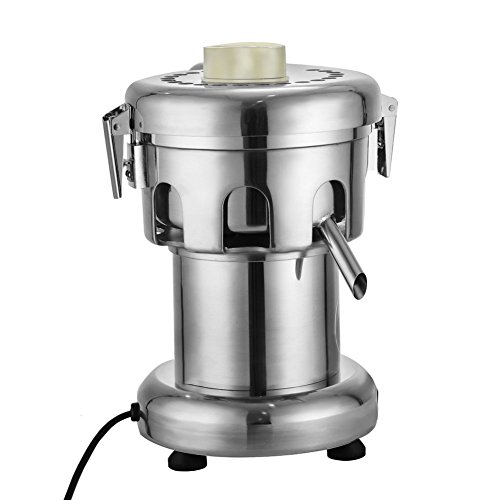
The WF-A3000 suits a smaller commercial kitchen that still wants the adjustable-outlet style of pulp control. Its listing describes a 370W centrifugal extractor in stainless steel, built for juice bars, spas, and restaurants, with an adjustable juice outlet offering eight positions so the pour can be set to suit the workspace and serving style. That combination of modest power draw and a repositionable spout makes it a practical fit where counter space and outlet access are both tight.
Specs
- Brand: WF-A3000 (model name)
- Model number: WF-A3000
- Power: 370W
- Voltage: 110 Volts
- Pulp handling: Adjustable juice outlet with 8 positions
- Construction: Stainless steel, heavy duty
- Use described on listing: Commercial juice extractor for fruit and vegetables
Best for: Small cafes, spa bars, and restaurant prep corners adding fresh juice without dedicating a full station to it.
Watch out for: Check the live listing for the full included-parts list and dimensions, because the summary details for this model are shorter than those of the other two machines here.
ASIN: B072JXNTNS
Which One Fits Your Situation
You Run a Bar Programme With a Changing Menu
Pick the Breville Commercial Juice Fountain XL Pro. A menu that moves between citrus in the morning, soft fruit for spritzes, and hard vegetables for health drinks benefits from variable speed selection working alongside the listed pulp control feature. The large pulp bin also means fewer interruptions while a bartender works through a prep list before service begins.
You Sell Juice by Volume All Day
Go with the NICE CHOOSE Commercial Juice Extractor. Its listing speaks in hourly output, which is the language of a counter that never really stops. The eight-position outlet lets staff set the pour and pulp separation once for the house style of juice, then repeat that setting across hundreds of servings without further adjustment.
You Are Adding Juice to a Small Existing Kitchen
Take the WF-A3000. A 370W draw and a compact extractor format place less demand on a crowded circuit and a short counter run. The adjustable outlet matters here too, because in a tight kitchen the jug cannot always sit in the ideal spot, and repositioning the spout solves a layout problem that a fixed outlet cannot.
You Care Most About Texture Consistency Across Staff
Any of the three can work, but decide by how your team thinks. If your staff follow written settings, the numbered outlet positions on the two extractor models are easy to record in a prep sheet. If your team juice by produce type, the Breville Commercial approach of speed selection by ingredient will feel more natural to train.
Common Mistakes
- Assuming every listing means the same thing by pulp control, when one names it as a special feature and others deliver it through a repositionable juice outlet.
- Buying on wattage alone and ignoring pulp bin or jug capacity, then discovering the machine stops for emptying more often than it juices during a rush.
- Forgetting to check voltage against the building supply, even though these listings state 110 or 120 volts and commercial sites sometimes run different circuits.
- Planning a menu around whole-fruit feeding without confirming the feed chute measurement stated on the specific listing you order.
- Leaving texture settings undocumented, so each shift produces a different style of juice from the same machine and regulars notice the inconsistency.
Frequently Asked Questions
Does adjustable pulp control change the taste of the juice?
It changes texture and mouthfeel rather than flavour itself. More pulp in the glass makes a juice feel thicker and heavier, while stronger separation gives a clearer, lighter drink. The underlying sweetness and acidity come from the produce, so the same oranges can pour as two noticeably different drinks from one machine.
How is a centrifugal juicer different from a slow juicer for commercial use?
A centrifugal machine spins produce against a mesh filter at high speed, which suits fast service and large batches during a rush. A slow juicer presses produce gradually and is usually chosen for quiet, small-batch work. For a counter serving a queue, the centrifugal format in this guide matches the pace most operators need.
Can these machines handle leafy greens and wheatgrass?
Listings for the Breville Commercial model mention produce such as carrots, apples, wheatgrass, and ginger among the foods it can be fed. Even so, leafy material behaves differently from hard produce in a centrifugal basket, so check the exact listing wording for the model you choose and expect to alternate greens with firmer ingredients.
What should I verify on the Amazon page on the day I order?
Confirm the model number, the pulp control wording, jug and pulp bin capacities, voltage, and what is included in the box. Listings are revised over time, and the version of the page you order from is the one that defines what arrives. A two-minute check prevents a mismatch between your prep plan and the delivered machine.